
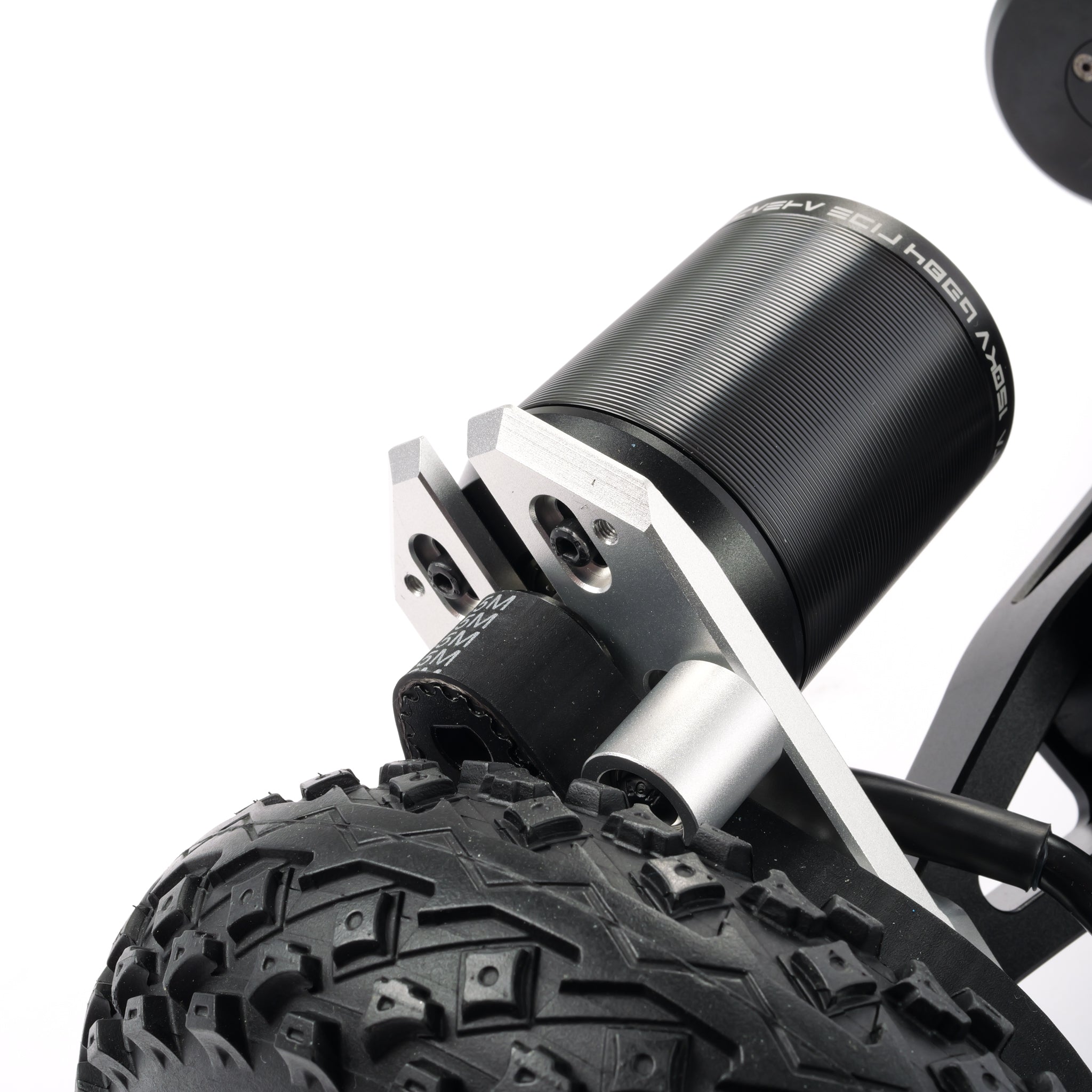
When you look at the ONSRA VELAR, one thing immediately stands out: it comes in two different drive systems — Belt Drive and Gear Drive.
Both are powerful, precision-built, and completely CNC-machined, but they behave very differently once you hit the road.
Here’s the definitive 2025 breakdown to help you decide which version is made for your riding style.
https://onsra.eu/collections/velar

How Both Systems Work
-
Belt Drive:
Uses pulleys and a rubber belt to transfer motor torque to the wheels. The belt can flex slightly, absorbing shocks and allowing quick pulley swaps to fine-tune torque or top speed. -
Gear Drive:
Uses fully enclosed steel gears instead of belts. The gears are sealed inside a CNC housing with lubrication — zero slippage, zero belt maintenance, and constant torque output.
Both versions share the same 14S4P (1036 Wh) battery, dual 6384 150 Kv motors, and insane torque delivery.
The difference is how that power hits the ground.
https://onsra.eu/collections/velar
Belt Drive – The Classic Power Setup
Pros
-
Strong torque with a smoother, more forgiving power curve.
-
You can easily change pulley sizes to adjust gearing for top speed or hill power.
-
Slightly quieter when new, with a softer mechanical feel.
-
Easier wheel swaps — you can mount street, rubber, or AT wheels in minutes.
Cons
-
Belts wear over time and need retensioning or replacement.
-
Dirt and stones can shorten belt life if you ride off-road.
-
More exposed to water, so not ideal for constant rain riding.
Best For:
Riders who love tuning their setup, switching wheel types, or doing both street and light off-road rides.
If you want versatility and don’t mind minimal maintenance, the Belt Drive VELAR is perfect.

Gear Drive – The Ultimate Precision Machine
Pros
-
Fully sealed CNC housing – no belts, no slippage, no maintenance.
-
Permanent torque transfer with zero flex or lag.
-
Virtually immune to dust, stones, and moisture.
-
Sharper acceleration, consistent performance under heavy load.
-
Distinct mechanical sound — powerful but refined.
Cons
-
Slightly heavier than the belt version.
-
You can’t swap gear ratios as easily as pulleys.
-
Wheel compatibility is fixed to the included gear hubs.
Best For:
Riders who want maximum reliability, instant power response, and minimal upkeep.
If you ride in harsh conditions or demand pure performance, the Gear Drive VELAR is built for you.
https://onsra.eu/collections/velar

Real-World Performance Comparison
| Feature | VELAR Belt Drive | VELAR Gear Drive |
|---|---|---|
| Torque Delivery | Smooth, progressive | Instant, aggressive |
| Top Speed | ~62 km/h | ~62 km/h |
| Maintenance | Belt tension & replacement | None |
| Water Resistance | Moderate | Excellent (sealed) |
| Noise | Softer | Mechanical hum |
| Wheel Options | Interchangeable | Fixed gear hubs |
| Weight | Slightly lighter | Slightly heavier |
| Ride Feel | Elastic, comfortable | Direct, solid |
Which VELAR Should You Choose?
-
Choose Belt Drive if you like flexibility — switching wheel types, adjusting pulleys, and maintaining your setup occasionally. It’s for riders who like to tune their board.
-
Choose Gear Drive if you want a sealed system that just works — no adjustments, no replacements, only raw, efficient power every single ride.
Both share ONSRA’s signature 14S battery, CNC construction, and 4-year warranty, so whichever you pick, you’re riding one of the most advanced electric skateboards in the world.
Conclusion
The Belt Drive VELAR is all about customization and comfort.
The Gear Drive VELAR is about efficiency and zero-maintenance performance.
No matter which you choose, you’re getting ONSRA’s flagship engineering — a high-torque, 14S powerhouse built in true Swiss precision.
Both systems deliver elite performance; it’s only a question of what kind of rider you are.
https://onsra.eu/collections/velar

Electric Skateboard Battery Guide 2025: Travel-Safe 99 Wh Packs & 14S High-Power Range Upgrades
Street vs All-Terrain Wheels – Which Setup Fits Your Riding Style?