
En matière de skateboards électriques, tout le monde parle de moteurs et de vitesse, mais c'est la batterie qui détermine l'autonomie, le couple, la puissance délivrée et même la légalité lors des déplacements.
Si vous comprenez la configuration de votre batterie, vous saurez exactement quoi acheter, quelle distance vous parcourrez et si vous pouvez emporter votre planche en avion.
Décortiquons tout cela comme il se doit – sans fioritures, juste des spécifications et des faits concrets du monde du skateboard électrique en 2025.

Pourquoi la capacité et la tension de la batterie sont importantes
Chaque batterie de skateboard électrique est évaluée en watts-heures (Wh) – un chiffre qui indique la quantité d'énergie que la batterie peut stocker.
Watts-heures = Tension × Ampères-heures.
La tension (nombre de S) détermine la puissance que votre planche peut délivrer. Un système 14S offre plus de punch, une accélération plus forte et moins de chute de tension qu'une configuration 10S ou 12S.
C'est la différence entre une planche qui monte difficilement les collines et une qui les dévore.
Configurations typiques :
-
10S / 12S : Standard pour les planches de milieu de gamme — couple décent, vitesse moyenne.
-
14S : Classe haute performance — réponse plus rapide, plus de couple et puissance de sortie très stable.
La capacité définit sa durée de vie — 99 Wh, c'est peu, 259 Wh, c'est de la moyenne, et 1000 Wh+, c'est pour les trajets d'une journée entière.
Mais il y a une autre variable clé : les réglementations. Tout ce qui dépasse 100 Wh devient délicat en avion.
https://onsra.eu/collections/zeno
Batteries 99 Wh compatibles avec le transport aérien – Leur importance cruciale
La plupart des gens ne réalisent pas que l'Association du Transport Aérien International (IATA) limite les batteries au lithium transportées en cabine à 99 Wh.
Tout ce qui dépasse cette limite doit être déclaré ou est purement et simplement interdit sur la plupart des compagnies aériennes.
C'est pourquoi l'ONSRA ZENO existe — un petit skateboard électrique prêt à voyager, conçu autour de la limite de 99 Wh.
Vous pouvez littéralement le transporter en avion comme bagage à main et rouler légalement presque partout une fois arrivé.
Faits clés sur le ZENO :
-
Batterie : Pack 99 Wh compatible voyage (approuvé par les compagnies aériennes)
-
Mise à niveau optionnelle : Batterie 259 Wh autonomie étendue
-
Autonomie : Jusqu'à ~12 km avec 99 Wh, ~25 km avec 259 Wh
-
Système d'échange : Conception de batterie à échange rapide, prête à l'emploi
-
Cas d'utilisation : Parfait pour la ville, les courts trajets et les voyageurs fréquents
Le génie réside dans la flexibilité — voyagez avec la 99 Wh, puis améliorez sur place avec le pack 259 Wh pour une plus grande autonomie.
Vous obtenez le meilleur des deux mondes : conformité aérienne et performances étendues.
Aucun autre skateboard électrique dans ce segment n'offre un système d'échange de batterie modulaire aussi propre qui respecte les limites internationales.

La bête de puissance : systèmes 14S haute tension
Lorsque vous recherchez une puissance brute et une endurance, la tension est reine.
L'ONSRA VELAR est construit autour d'une batterie 14S4P (1036 Wh) — une configuration sérieuse offrant un couple brutal, un rendement élevé et une capacité exceptionnelle à gravir les pentes.
Points forts du VELAR :
-
Batterie : Configuration 14S4P (≈1036 Wh)
-
Moteurs : Doubles 6384 – 150 Kv – 3500 W
-
Vitesse maximale : ~62 km/h (38 mph)
-
Autonomie : Jusqu'à 60 km (37 miles)
-
Couple : Traction incroyable à bas régime sur les pentes raides
-
Cas d'utilisation : Longues distances, routes de montagne escarpées, tout-terrain
Une batterie 14S signifie 14 cellules en série, augmentant la tension sans nécessiter de fils plus épais ni de tirage de courant plus élevé.
Cela maintient le système efficace, plus frais et plus doux sous charge.
Lorsque vous roulez avec un VELAR, vous ressentez une puissance constante – pas de baisse de régime à mi-parcours, pas de perte de couple dans les côtes.
C'est la raison pour laquelle cette planche domine les courses en côte et les sessions tout-terrain intensives.
Pour tout passionné de performance, le 14S est la tension de référence pour les longboards électriques en 2025.
https://onsra.eu/collections/all-electric-skateboards-and-longboards
Cellules 18650 vs 21700 – Quelle est la vraie différence ?
Beaucoup de marques se vantent de leurs "grosses batteries" mais ne disent jamais ce qu'il y a à l'intérieur.
La vérité : le type de cellule compte autant que la tension ou la capacité.
-
Les cellules 18650 ont été le standard de l'industrie pendant des années – fiables mais limitées en taux de décharge.
-
Les cellules 21700 (comme les Samsung 50S utilisées dans les packs ONSRA) stockent plus d'énergie et gèrent des courants de décharge plus élevés sans surchauffe ni chute de tension.
C'est pourquoi toutes les planches ONSRA actuelles utilisent des cellules 21700 de première qualité – et non des packs recyclés bon marché.
De meilleures courbes de décharge = une accélération plus forte, une durée de vie plus longue et une autonomie plus constante.

Échange et mise à niveau des batteries – Ce qu'il faut savoir
Si vous envisagez de mettre à niveau ou d'échanger des batteries, voici la réalité :
-
Ne modifiez pas la tension à moins que votre ESC et votre BMS ne puissent la gérer.
-
L'ONSRA ZENO utilise un système modulaire sûr qui vous permet de passer de 99 Wh à 259 Wh sans toucher à l'électronique.
-
Le VELAR et le BLACK Carve 3 PRO utilisent des packs intégrés haute puissance conçus pour une sortie maximale, et non pour des échanges DIY.
Liste de contrôle avant de mettre à niveau :
-
Faire correspondre la tension et la configuration des cellules.
-
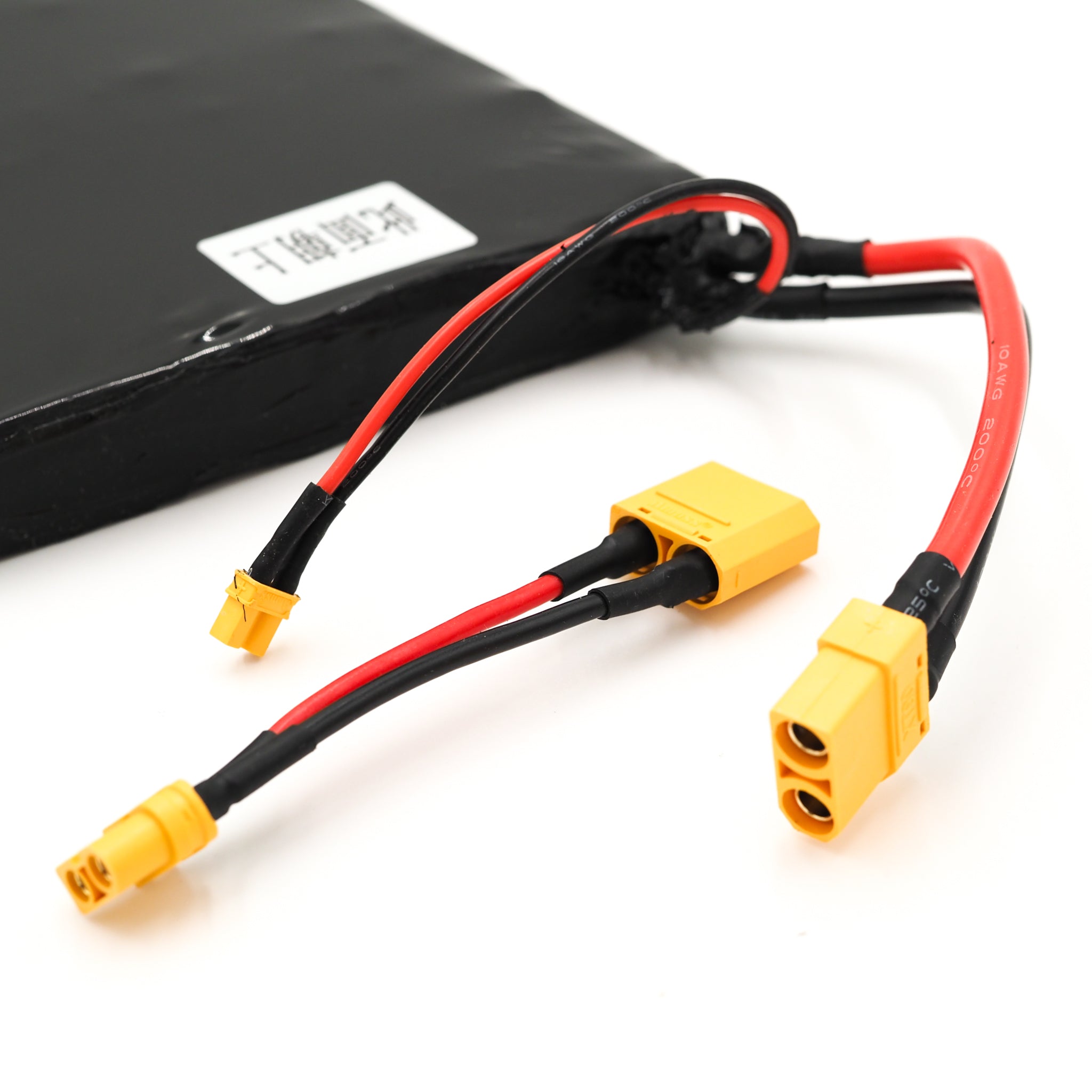
Assurer la compatibilité des connecteurs.
-
Vérifier la taille du boîtier et l'espace de refroidissement.
-
Ne jamais expédier des packs >100 Wh par avion — transport terrestre uniquement.
Si vous vous trompez, vous risquez de griller votre ESC ou de provoquer un court-circuit. C'est pourquoi les solutions modulaires comme le système de ZENO sont le seul chemin de mise à niveau sûr à considérer en voyage.
Choisir la bonne batterie pour votre style de pilotage
| Type de pilote | Planche recommandée | Configuration de la batterie | Pourquoi |
|---|---|---|---|
| Grand voyageur, citadin | ZENO | 99 Wh / 259 Wh interchangeables | Compatible avion, ultra-portable, échange facile |
| Pilote longue distance, terrain vallonné | VELAR | 14S 1036 Wh | Puissance et couple maximaux |
| Polyvalent quotidien | BLACK Carve 3 PRO | Batterie 12S avec BMS haute efficacité | Puissance équilibrée et fiabilité |
Votre choix dépend de votre façon de rouler :
-
Besoin de portabilité et de liberté de voyage ? Optez pour le modulaire 99 Wh / 259 Wh.
-
Envie d'un couple inégalé et d'un contrôle en côte ? Optez pour le 14S haute tension.
-
Envie de trajets quotidiens équilibrés ? Optez pour le 12S de milieu de gamme.
Conseils pour une autonomie réelle
-
Le temps froid réduit l'autonomie jusqu'à 30 %.
-
Une accélération agressive vide les batteries plus rapidement qu'une croisière régulière.
-
La taille et la pression des pneus influencent la résistance au roulement.
-
Le poids du pilote et le terrain sont les plus grandes variables — un pilote de 90 kg aura toujours moins d'autonomie qu'un pilote de 65 kg.
Calculez toujours l'autonomie de manière réaliste.
Les chiffres « jusqu'à » des fabricants supposent des routes plates, des températures idéales et un mode éco.
Les estimations d'ONSRA sont basées sur de vrais utilisateurs, de vraies routes et une vitesse réaliste.
Foire aux questions
Puis-je voyager en avion avec une batterie de 259 Wh ?
Non. La plupart des compagnies aériennes limitent les batteries au lithium en cabine à 99 Wh. Utilisez le pack 99 Wh pour voyager et le 259 Wh pour rouler localement.
Quelle est la différence entre 12S et 14S ?
Une tension supérieure d'environ 10 à 15 % sur le 14S signifie plus de couple, de vitesse et de stabilité sous forte charge.
Une capacité en Wh plus élevée signifie-t-elle toujours une autonomie plus longue ?
En général, oui, mais l'efficacité, la transmission, le type de moteur et le terrain influent également sur l'autonomie.
Est-il sûr de charger toute la nuit ?
Uniquement avec un chargeur certifié et une protection BMS — toutes les planches ONSRA intègrent des systèmes BMS intelligents qui gèrent la sécurité de charge et de décharge.
Conclusion
La batterie définit votre expérience de conduite plus que tout autre composant.
Si vous voulez une planche qui voyage partout — optez pour le système modulaire ONSRA ZENO 99 Wh / 259 Wh.
Si vous aspirez à une autonomie et un couple qui dévorent les collines — l'ONSRA VELAR 14S 1036 Wh est dans une catégorie à part.
Les deux sont conçus pour la puissance, la précision et la fiabilité en conditions réelles — et non pas pour des chiffres marketing.
En 2025, la performance de la batterie est la ligne qui sépare les planches moyennes des machines de qualité professionnelle.
Et ONSRA construit ces dernières.

Quelle est la vitesse réelle d'un skateboard électrique ? (Tests réels, vitesse réelle)
Transmission par courroie ou par engrenages – Quelle configuration ONSRA VELAR est faite pour vous ?